Dave Portnoy's $7 Million Tariff Tale: A Wake-Up Call for High-Net-Worth Investors
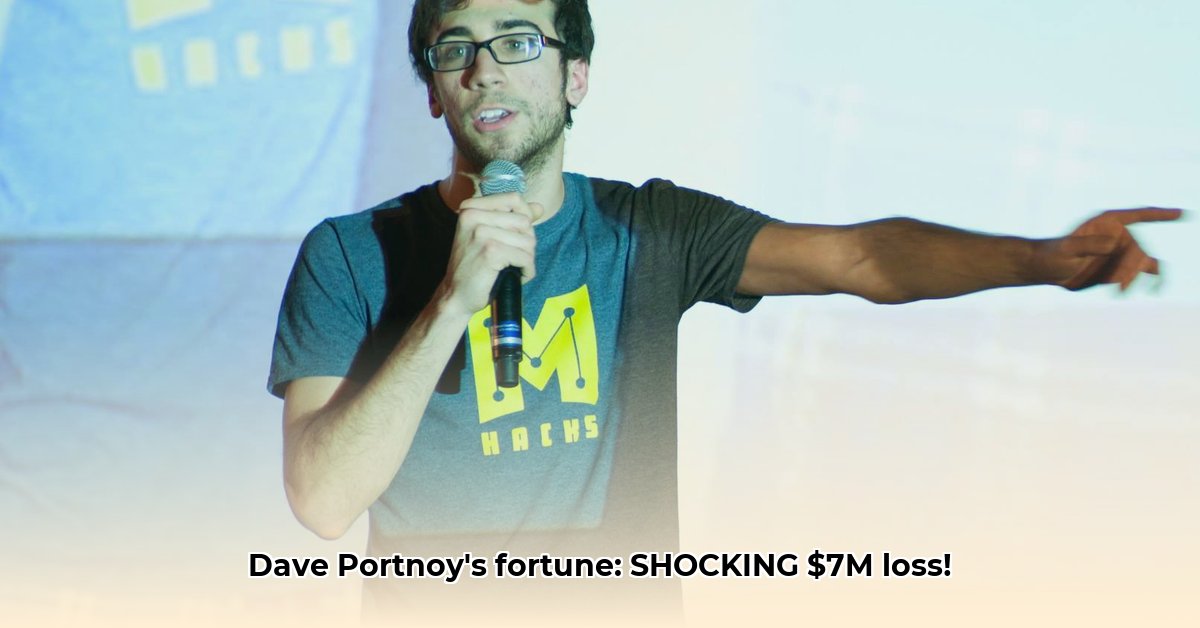
Dave Portnoy, the outspoken founder of Barstool Sports, recently experienced a significant $7 million drop in his net worth, directly attributable to the Trump-era tariffs. This isn't simply a celebrity financial setback; it serves as a stark warning about the often-overlooked risks inherent in even the most diversified investment portfolios. Portnoy's experience highlights the vulnerability of high-net-worth individuals (HNWIs) to unforeseen geopolitical events and underscores the need for improved transparency in trade policy. For more on high-net-worth individuals and their financial situations, check out this resource.
The Unexpected Impact of Tariffs
Initially supportive of the tariffs' rationale, Portnoy's $7 million loss—a combination of losses in stocks and cryptocurrency directly impacted by these policies—came as a harsh reality check. This significant financial blow, even for someone of Portnoy's wealth, demonstrates the unpredictable nature of global trade and its far-reaching consequences. How could such a substantial loss occur, even for a financially savvy individual? The answer lies in the often-overlooked complexity of global trade and the opaque nature of tariff structures. Isn't it surprising how easily even an experienced figure like Portnoy could be impacted?
Beyond Portnoy: A Broader Vulnerability
Portnoy's situation is not an isolated incident. It points to a systemic vulnerability affecting numerous HNWIs. The intricate global supply chain means that the effects of tariffs are often far-reaching, impacting sectors seemingly unrelated to the initial trade dispute. An investment deemed safe today could easily be devalued by unforeseen trade conflicts tomorrow. This underscores the necessity of considering geopolitical factors when creating investment strategies. What percentage of HNWIs have a comprehensive risk model encompassing geopolitical events? The answer, unfortunately, is likely far too low.
The Opacity of Tariffs: Navigating Uncharted Waters
The lack of transparency surrounding tariff structures presents an enormous challenge for investors. Predicting the potential impact of tariffs is exceedingly difficult, even for those with extensive financial expertise. The complexity of international trade agreements and the often-unforeseen consequences of trade disputes create a significant hurdle for even the most well-informed investors. This uncertainty is amplified in the current environment of shifting global alliances and unpredictable geopolitical events. How can investors effectively navigate this intricate system, ensuring the protection of their wealth?
Political Beliefs vs. Financial Realities: A Complex Relationship
Portnoy's continued support for the administration's policies, despite experiencing significant financial losses due to those very policies, exemplifies the complexities of the relationship between personal beliefs and financial decisions. This disconnect highlights the importance of objectively assessing investment risks, regardless of political affiliations. Should personal politics ever influence major financial decisions? This is a question that requires careful consideration for all investors.
Mitigating Risk: A Multifaceted Approach
Portnoy's experience highlights the need for a multi-faceted approach to mitigating risks associated with global trade policies. The following steps, tailored to HNWIs, policymakers, and businesses, are critical:
For High-Net-Worth Individuals:
- Diversify across asset classes and geographic locations: Reduce reliance on single investments or regions. (Diversification mitigates risk by spreading investments across different assets and areas.)
- Develop sophisticated risk models: Incorporate geopolitical factors and potential trade disruptions into investment strategies. (A sophisticated risk model assesses all potential financial pitfalls.)
- Engage in proactive due diligence: Thoroughly research the supply chains of your investments to identify vulnerabilities. (Due diligence involves research for potential risks.)
For Policymakers:
- Enhance transparency in tariff structures: Simplify trade policies and increase public understanding. (Transparency ensures clarity and accountability.)
- Foster international cooperation: Work collaboratively to resolve trade disputes and minimize economic disruption. (International cooperation is crucial for stable trade.)
- Prioritize long-term economic stability: Avoid protectionist measures that could have negative unintended consequences. (Long-term stability is important for economic health.)
For Businesses:
- Diversify supply chains: Reduce dependence on single suppliers and cultivate alternate sources. (Diversification safeguards supply chains.)
- Develop contingency plans for trade disruptions: Prepare for potential delays, increased costs, or other challenges. (Contingency planning facilitates response to crisis.)
- Advocate for policies that promote open trade: Support measures that encourage global collaboration and ease trade restrictions. (Open trade is beneficial for global economies.)
Risk Assessment Matrix
| Factor | Likelihood of Problems | Severity of Problems | Mitigation Strategies |
|---|---|---|---|
| Tariffs/Trade Wars | High | High | Diversification, geopolitical risk analysis, lobbying for change |
| Supply Chain Disruptions | Medium | Medium | Supplier diversification, contingency planning |
| Market Volatility | High | Medium | Hedging, diversified portfolio, stress testing |
The lessons from Portnoy’s experience are clear: Even substantial wealth is not immune to the unpredictable impact of global trade policies. Proactive risk management, enhanced transparency, and a nuanced understanding of geopolitical factors are crucial for navigating the complexities of the global economy. The ongoing evolution of international trade necessitates continuous adaptation and vigilance in investment strategies.